
Bring a tired lawn back
Overseeding & Lawn Repair in Charlotte, NC
Fall fescue overseeding, aeration and patch repair for lawns that have thinned out.
- No-charge site walk and a written quote
- Seed mix chosen for your sun, shade and the season
- Grading, silt fence and seed on one schedule
Thicken What You Have, Fix What Failed
Overseeding and lawn repair are for Charlotte lawns that are not dead but are not doing well either: thin fescue after a hot summer, bare spots under trees, ruts from a contractor's truck, a strip dug up for a utility line. Instead of starting over, we loosen the ground, add seed where the turf is thin, and hydroseed or patch areas that have gone bare. Done at the right time of year, it brings back density without a full renovation.
Why fescue thins out here
Tall fescue is the most common lawn grass in Charlotte because it stays green much of the year and handles shade. It also has a known weakness in this climate. NC State Extension says tall fescue is highly susceptible to brown patch, a disease that shows up as irregular patches of dying grass when it is humid and above 85 degrees, and gets worse in long stretches of warm, wet, overcast weather. On average, 44 days a year in Charlotte reach 90 degrees or more, and summer nights stay warm and muggy. NC State also notes that fescue does not recover well from heavy wear or pest damage and must be reseeded if damage is excessive. In other words, many fescue lawns here need some reseeding every few years. That is normal, not a sign you did something wrong.
The fall window
Timing is the biggest factor in whether overseeding works. NC State's tall fescue calendar puts the Piedmont window for overseeding thin, bare areas at September 1 to October 1, as the weather cools. Seed sown then has warm soil to germinate, cooler air to grow in, and a full fall and spring to root before the next summer. Seed sown in spring sprouts but goes into its first summer with shallow roots, and much of it does not make it. NC State's recommended rate is about 6 pounds of turf-type tall fescue blend per 1,000 square feet, with a starter fertilizer if you do not have a soil test.
Aeration on clay
Core aeration pulls small plugs of soil from the lawn, relieving compaction and opening space for seed, water and air. NC State recommends aerating lawns grown on clay soils or subject to heavy traffic, and for fescue it says to hold aeration until fall. On Charlotte's red clay, aerating right before overseeding gives seed more places to land in actual soil instead of sitting on top of thatch or hardpan. We usually pair the two.
Bermuda lawns are different
If your lawn is bermudagrass, fall overseeding with fescue is not the fix. Bermuda spreads by runners and repairs itself in summer if it gets sun, water and fertilizer. NC State's calendar starts replanting bare or worn bermuda areas in late May, using sod or sprigs, or seed for common bermuda. Hybrid varieties like Tifway have to be patched with sod or sprigs. Bermuda also needs full sun, so if a bare spot is under a tree that has grown in over the years, the real answer may be a shade-tolerant fescue in that area or a bed instead of grass.
Lawn repair and renovation
Not every problem is thin grass. We repair:
- Ruts and tracks from equipment, with the ground loosened and leveled before reseeding.
- Utility and drain trenches that settled or were backfilled with subsoil and rock.
- Washed-out areas where runoff cut through the lawn, regraded so it does not happen again.
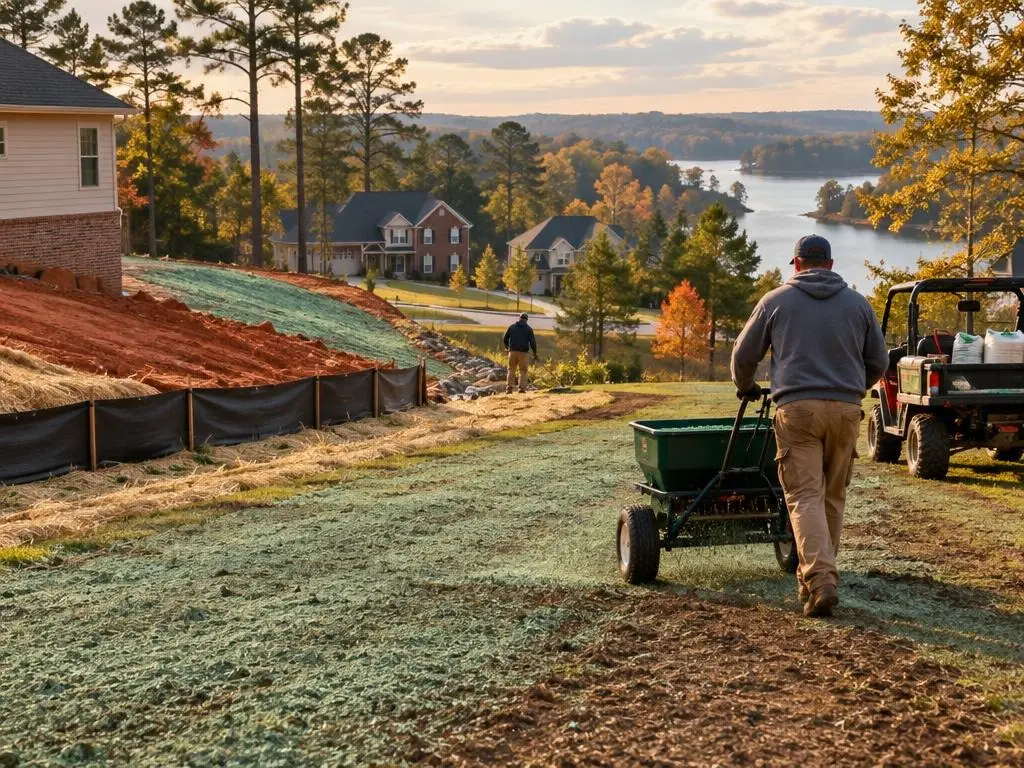
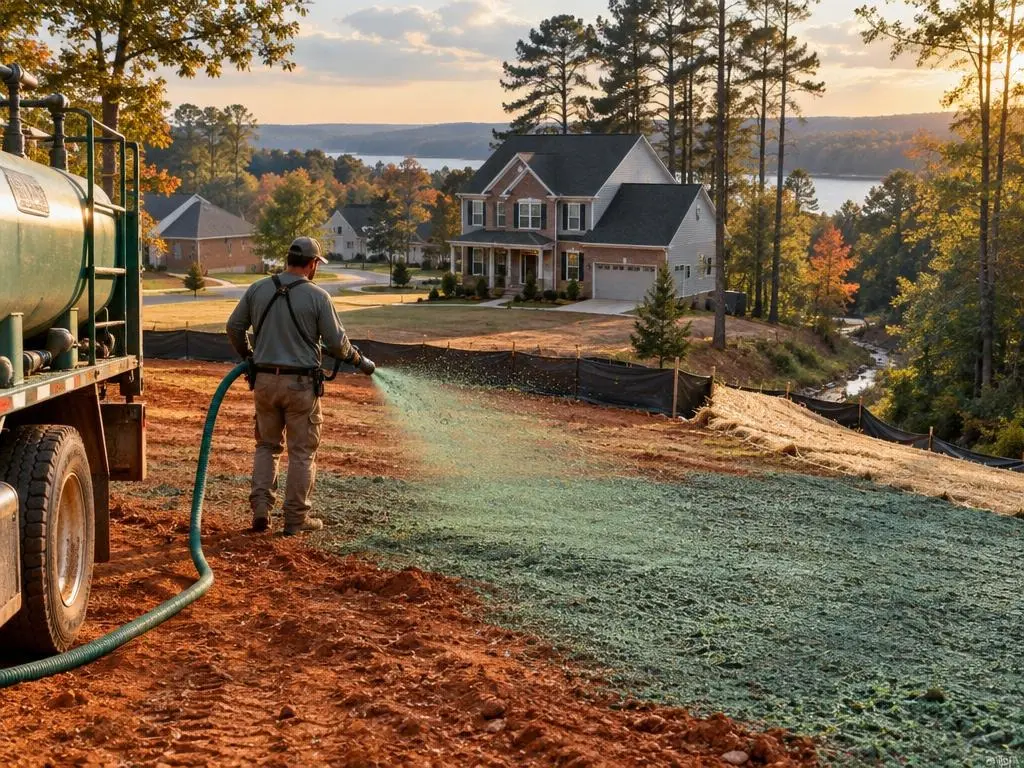
- Large bare areas that are better hydroseeded than hand seeded, so the mulch protects the seed.
For lawns that are more weeds than grass, a full lawn renovation, where we kill off the old turf, prep the soil and hydroseed, can make more sense than overseeding. We will tell you which way we think your lawn should go.
Shade under Charlotte's trees
Many older Charlotte neighborhoods are known for mature trees along their streets, and the lawns under them thin out year after year as the canopy grows. Tall fescue is the most shade-tolerant of the common lawn grasses here, and improved turf-type fescues handle shade better than the old Kentucky-31. Even so, grass needs some sun. Where a spot gets almost none, we will suggest a shade-tolerant fescue blend and realistic expectations, or tell you that a bed or ground cover would be the better use of that space.
Keeping new seed alive
Overseeded lawns need the same care as a new lawn for a few weeks. NC State says to keep the seedbed moist with light watering several times a day and not let seedlings dry out. Skip herbicides until the young grass has been through several mowings, since some weed products can damage new seedlings. Then mow high, 3 inches or more for fescue, which also helps with brown patch next summer. Get a free estimate
Lawn Repair Services
From a few bare spots to a whole-yard refresh.
Fall fescue overseeding
Turf-type tall fescue blend seeded into thin lawns in the September window.
Core aeration
Plugs pulled from compacted clay before seeding, for better seed contact.
Bare spot hydroseeding
Larger bare areas sprayed with seed and mulch instead of hand seeded.
Rut and trench repair
Ground loosened, leveled and reseeded after equipment or utility work.
Bermuda patching
Late-spring sod, sprigs or seed for bare areas in sunny bermuda lawns.
Full lawn renovation
Old turf removed, soil prepped and the yard hydroseeded from scratch.
Overseeding and Repair Price Ranges
| Service | Published range |
|---|---|
| Overseeding, per sq ft (Lawn Love) | $0.07 to $0.23 |
| Aeration and overseeding, per sq ft (Fixr) | $0.08 to $0.25 |
| Aeration and overseeding, per acre (Fixr) | $700 to $1,400 |
| Professional lawn seeding service (Angi) | $250 to $350 |
| Lawn aeration (HomeAdvisor) | $100 to $400 |
| Patch, rut and trench repair | Quoted after we see the lawn |
Published ranges for reference. Our itemized quote replaces them for your job. Lawn size, shade, soil and how thin the turf has gotten all move the number, so we price it after seeing the yard.
How a Lawn Repair Works
1. Diagnose
We look at grass type, shade, soil and what caused the damage.
2. Prepare
Mow low, aerate or loosen, and fix grade where water caused the problem.
3. Seed
Overseed thin areas and hydroseed or patch bare ones.
4. Feed and water
Starter fertilizer and a written watering plan for the first weeks.
Why Choose Us for Overseeding & Lawn Repair
Seasonal timing
Fescue repairs are booked for the fall window and bermuda for late spring.
Cause first
If shade, drainage or compaction caused the bare spot, we address it before seeding.
Right-sized fix
We will tell you if overseeding is enough or if renovation makes more sense.
Overseeding & Lawn Repair Questions
When should I overseed my fescue lawn in Charlotte?
Early fall. NC State's Piedmont window for overseeding thin fescue is September 1 to October 1. Spring seeding usually struggles through its first summer.
Should I aerate before overseeding?
On Charlotte clay, yes in most cases. Aeration relieves compaction and gives seed better contact with the soil. NC State recommends aerating clay lawns and doing it in fall for fescue.
Why does my fescue get brown patches every summer?
Likely brown patch disease, which shows up when it is humid and above 85 degrees. Mowing at 3 inches or more and watering early in the morning help, and overseeding in fall restores density.
Can I overseed a bermuda lawn?
Not with fescue as a permanent fix. Bermuda repairs itself in summer with sun and feeding; bare spots are patched in late spring with sod, sprigs or common bermuda seed.

Overseeding & Lawn Repair Service Areas
- Hydroseeding in Charlotte, NC
- Hydroseeding in Matthews, NC
- Hydroseeding in Mint Hill, NC
- Hydroseeding in Huntersville, NC
- Hydroseeding in Cornelius, NC
- Hydroseeding in Davidson, NC
- Hydroseeding in Mooresville, NC
- Hydroseeding in Concord, NC
- Hydroseeding in Harrisburg, NC
- Hydroseeding in Kannapolis, NC
- Hydroseeding in Gastonia, NC
- Hydroseeding in Belmont, NC
- Hydroseeding in Mount Holly, NC
- Hydroseeding in Cramerton, NC
- Hydroseeding in Indian Trail, NC
- Hydroseeding in Stallings, NC
- Hydroseeding in Pineville, NC
- Hydroseeding in Waxhaw, NC
- Hydroseeding in Monroe, NC
- Hydroseeding in Fort Mill, SC
- Hydroseeding in Rock Hill, SC
- Hydroseeding in Tega Cay, SC
- Hydroseeding in Lake Wylie, SC
- Hydroseeding in Clover, SC
Get an Overseeding & Lawn Repair Estimate
Book a fall overseeding visit early; the September window fills fast.